
Why South African SMEs Are Upgrading from Manual Processes to Zoho One

I've been watching with great interest as more South African businesses visit my website—particularly the workflow automation page. The traffic patterns tell me something important: South African SMEs are actively seeking solutions to move beyond manual, paper-based operations.
Having worked with businesses across multiple continents, I understand the unique challenges facing South African SMEs. With SARS compliance requirements, POPIA data protection regulations, load shedding disruptions, and the pressure to do more with limited resources, many businesses are still relying on manual processes that simply can't scale.
This case study explores why Zoho One—particularly Zoho CRM, Zoho Sign, and Zoho Books—represents an ideal solution for South African SMEs ready to digitise their operations and compete in an increasingly digital economy.
The Reality: Manual Operations Are Holding South African SMEs Back

Research reveals a concerning picture: South African SMEs spend an average of 15 to 20 hours each month on manual financial administration alone. With SMEs representing 91% of all South African businesses, employing 60% of the workforce, and contributing approximately 34% to GDP, this inefficiency has national economic implications.
The challenges facing South African businesses are particularly acute:
Time Drain from Manual Processes
Over 80% of SMEs in the MENA region, including South Africa, still rely on manual or semi-manual processes, which severely limit accuracy, efficiency, and scalability. Businesses are losing valuable hours to:
Manual data entry across disconnected spreadsheets and systems
Chasing signatures on physical documents through printing, scanning, and courier services
Creating invoices manually and following up on late payments
Preparing VAT returns and SARS reports without automated systems
Tracking leads and customer interactions in Excel or paper notebooks
Compliance Risks
South African businesses must navigate complex regulatory requirements:
SARS Compliance: The South African Revenue Service demands accurate VAT calculations, proper tax reporting, and timely submissions. Manual accounting systems create significant risk of errors and non-compliance.
POPIA Compliance: The Protection of Personal Information Act requires proper data handling, consent management, secure storage, and breach notification procedures. Manual systems struggle to maintain these standards.
Cash Flow Challenges
According to SAICA research, SMEs largely fail because of cash-flow problems and an inability to manage administrative and business processes effectively. Manual invoicing delays, forgotten payment reminders, and poor receivables tracking directly impact business survival.
Missed Growth Opportunities
When businesses operate with fragmented data across multiple systems, they cannot gain the holistic business view needed for strategic decisions. Sales opportunities disappear when leads aren't followed up promptly, and customer relationships suffer when information is scattered across email, spreadsheets, and team members' memories.
Are these challenges familiar to your business? If you're not sure where to start with digital transformation, my Zoho Process Audit can identify your biggest time-wasters and create a custom automation roadmap showing exactly which solutions will deliver the biggest ROI for your specific situation.
Why Zoho One Is Purpose-Built for South African SMEs
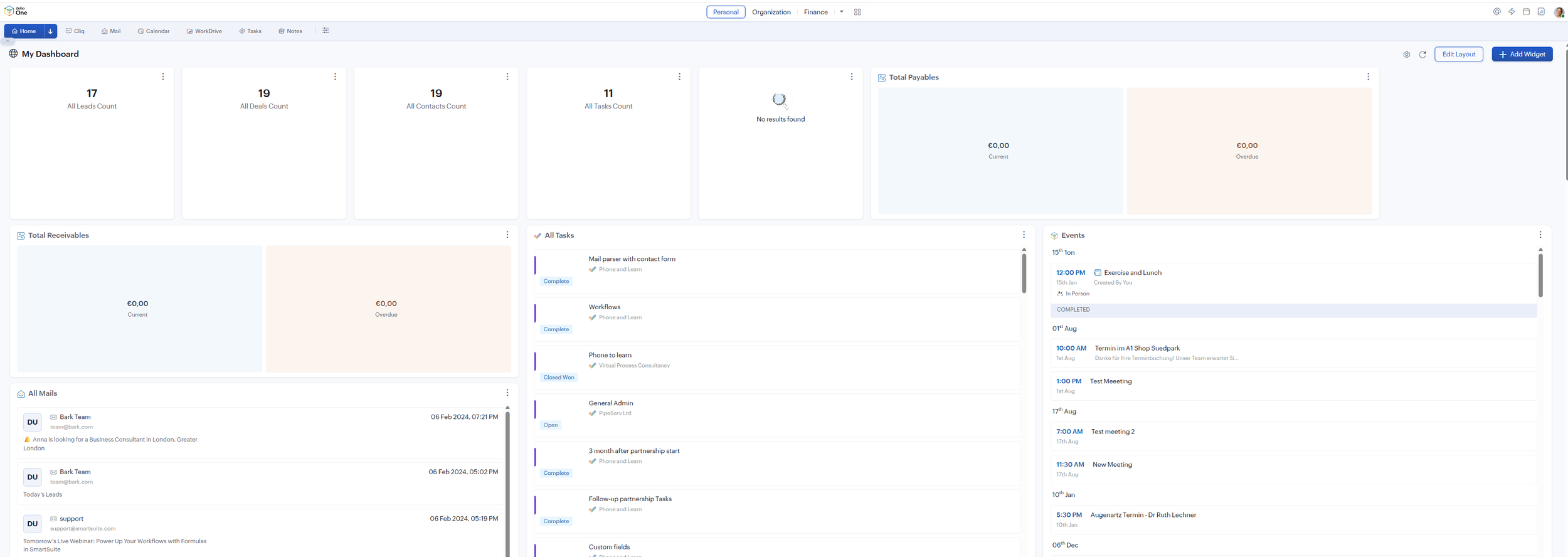
Zoho One offers a comprehensive, integrated suite of over 45 business applications on a single platform—and critically, it's specifically localised for the South African market.
Purpose-Built for South African Requirements
Since August 2024, Zoho has provided fully localised versions of Zoho Books, Zoho Invoice, and other applications that comply with South African VAT regulations and SARS requirements. The platform achieved 43% growth in new South African customers within just three months of launching its local edition, demonstrating the significant demand for properly localised business software.
Andrew Bourne, Regional Head of Zoho South Africa, emphasises the company's commitment: "South Africa is a significant market for Zoho, and we are committed to providing tools that help businesses here succeed in the digital era."
Affordable, Predictable Pricing in Rands
What makes Zoho One particularly attractive for South African SMEs is its affordability. Priced at approximately R450 per employee per month (when billed annually for all employees), or R525 per month on a flexible basis, Zoho One provides fixed rand pricing that protects businesses from currency fluctuations.
This pricing includes access to the entire suite—CRM, accounting, e-signatures, project management, HR, and more—eliminating the need for multiple expensive subscriptions to disconnected tools.
Integration with Local Systems
Zoho integrates seamlessly with South African payment providers, accounting systems like Xero, and communication tools, creating a unified technology stack that works with your existing infrastructure rather than replacing everything at once.
Zoho CRM: From Spreadsheet Chaos to Organised Sales Pipeline
For South African SMEs still tracking leads and customers in Excel spreadsheets or paper notebooks, Zoho CRM represents a transformational upgrade.
The Cost of Spreadsheet-Based Lead Management
When your sales process relies on Excel, you face:
No automated follow-ups: Leads go cold because there's no system to remind you when to reach out
Fragmented customer history: Information scattered across email, notes, and multiple team members
Zero pipeline visibility: No clear view of who's about to close or which deals are stalling
Team coordination problems: Multiple people editing the same spreadsheet creates version conflicts and errors
No mobile access: Sales teams can't update information on the go, leading to lost details
How Zoho CRM Transforms Lead Management
Centralised Customer Database: All customer interactions, emails, calls, and purchase history are stored in one unified system, accessible to your entire team in real-time. This eliminates the data fragmentation that plagues businesses using disconnected tools.
Automated Lead Management: Zoho CRM automates lead assignment based on territory, deal value, or custom rules, ensuring prompt follow-up and consistent customer experiences. Sales teams report closing 15% more enquiries after implementing Zoho CRM.
Mobile Access During Load Shedding: With offline capabilities and mobile apps, South African teams can continue working even during power outages—a critical advantage in the local market.
Pipeline Visibility: Real-time dashboards show exactly where every opportunity stands, which deals are progressing, and which require immediate attention. No more guessing about your sales forecast.
Real South African Success
Around About Removals in Pretoria transformed their entire workflow by integrating Zoho CRM with other business systems, moving from "pen and paper" planning to a fully digital, automated operation. This eliminated "tedious admin work, double entries, and duplication of effort" whilst creating a "single source of truth." You can read their case study on the Zoho website here: Zoho Case Study
Airport Property, a commercial property brokerage firm in Cape Town, successfully implemented Zoho CRM to manage their sales pipeline more effectively, gaining visibility and control that wasn't possible with their previous manual approach. You can read their case study on the Zoho website here: Zoho Case Study
Ready to stop losing leads in spreadsheet chaos? My Zoho CRM Implementation service delivers a fully configured, customised CRM tailored to your exact sales process—with your team trained and ready to use it from day one.
Zoho Sign: Eliminating the Paper Signature Bottleneck
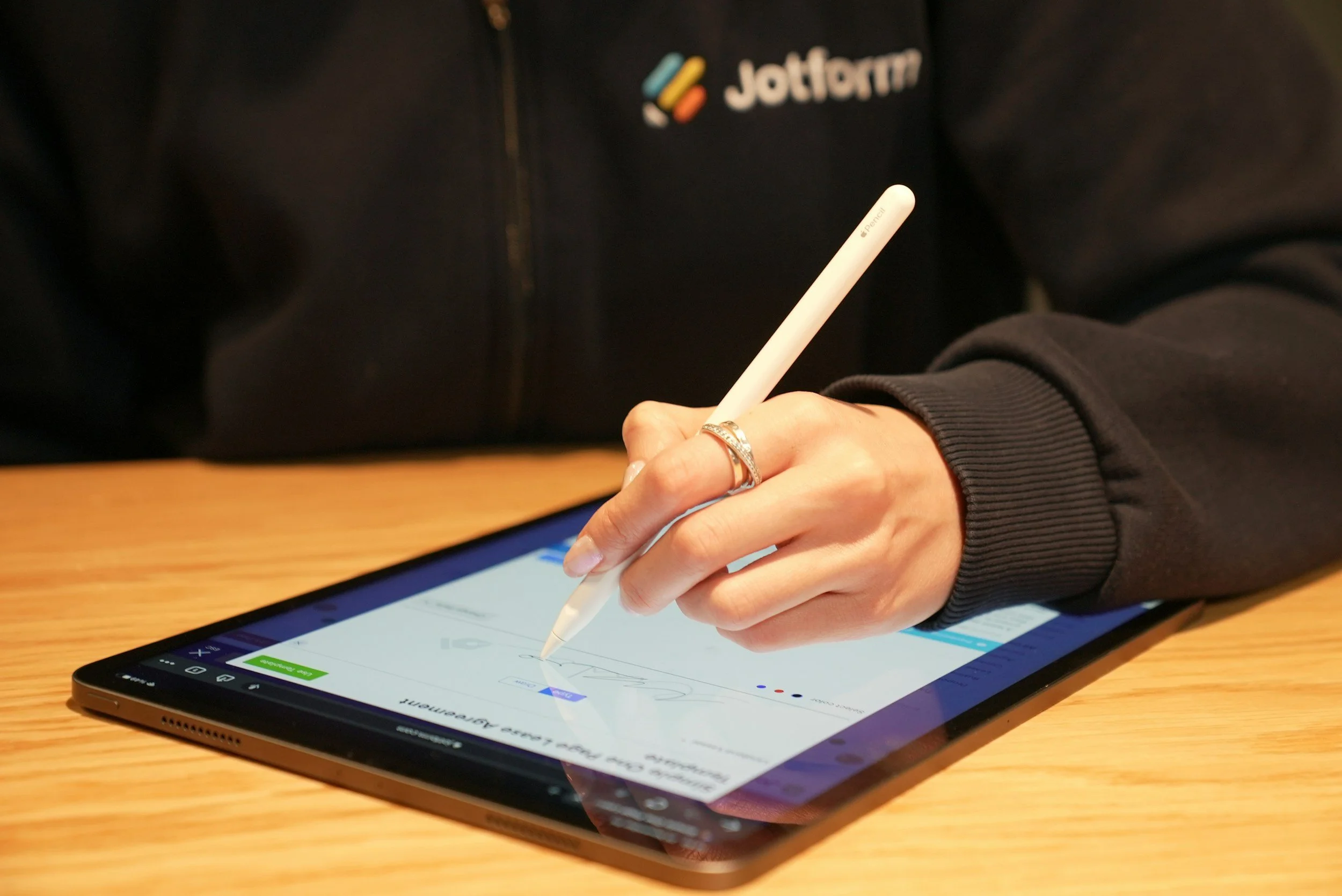
The digital signature market in South Africa is experiencing explosive growth, with market revenue expected to expand from USD 94.6 million in 2024 to USD 632.6 million by 2030—representing a 38.4% compound annual growth rate.
This surge reflects South African businesses' recognition that paper-based signing processes create unsustainable delays and costs.
The Hidden Cost of Paper-Based Signatures
Traditional document signing requires:
Printing multiple copies of contracts and agreements
Scanning or photographing signed documents
Mailing or couriering physical documents
In-person meetings to collect signatures
Following up repeatedly when documents sit unsigned on someone's desk
Filing and storing physical document copies
Research shows that electronic signatures can save businesses approximately R1.4 million annually in operating costs, whilst reducing document turnaround time by 80%—from weeks to minutes or days.
How Zoho Sign Accelerates Business
Legal Compliance: Zoho Sign complies with South Africa's Electronic Communications and Transactions Act (ECTA) of 2002, which recognises electronic signatures as legally binding. The platform's integration with TrustFactory, South Africa's top identity verification service accredited by the South African Accreditation Authority (SAAA), ensures Advanced Electronic Signatures meet the highest legal standards.
Dramatic Time Savings: Employees save an average of 50+ hours per year through digital signatures, eliminating time spent printing, scanning, and chasing signatures.
Cost Reduction: Zoho Sign saves approximately $30 (approximately R500-550) per envelope compared to traditional paperwork, with a forever-free plan available for small businesses.
Workflow Automation: Automated signing workflows eliminate bottlenecks in contract approvals, employee onboarding, client agreements, and invoicing.
Integration with Zoho Books: Documents can be sent for signature directly from Zoho Books, creating a seamless quote-to-cash workflow where invoices and agreements are signed and processed without manual intervention.
Typical Use Cases for South African Businesses
Service agreements sent to clients for approval within minutes of the sales call
Employment contracts signed by new hires remotely before their first day
Purchase orders approved electronically by multiple stakeholders without printing
Client invoices with terms and conditions signed and returned immediately
Compliance documentation requiring multiple signatures collected automatically
Zoho Books: SARS-Compliant Accounting Made Simple
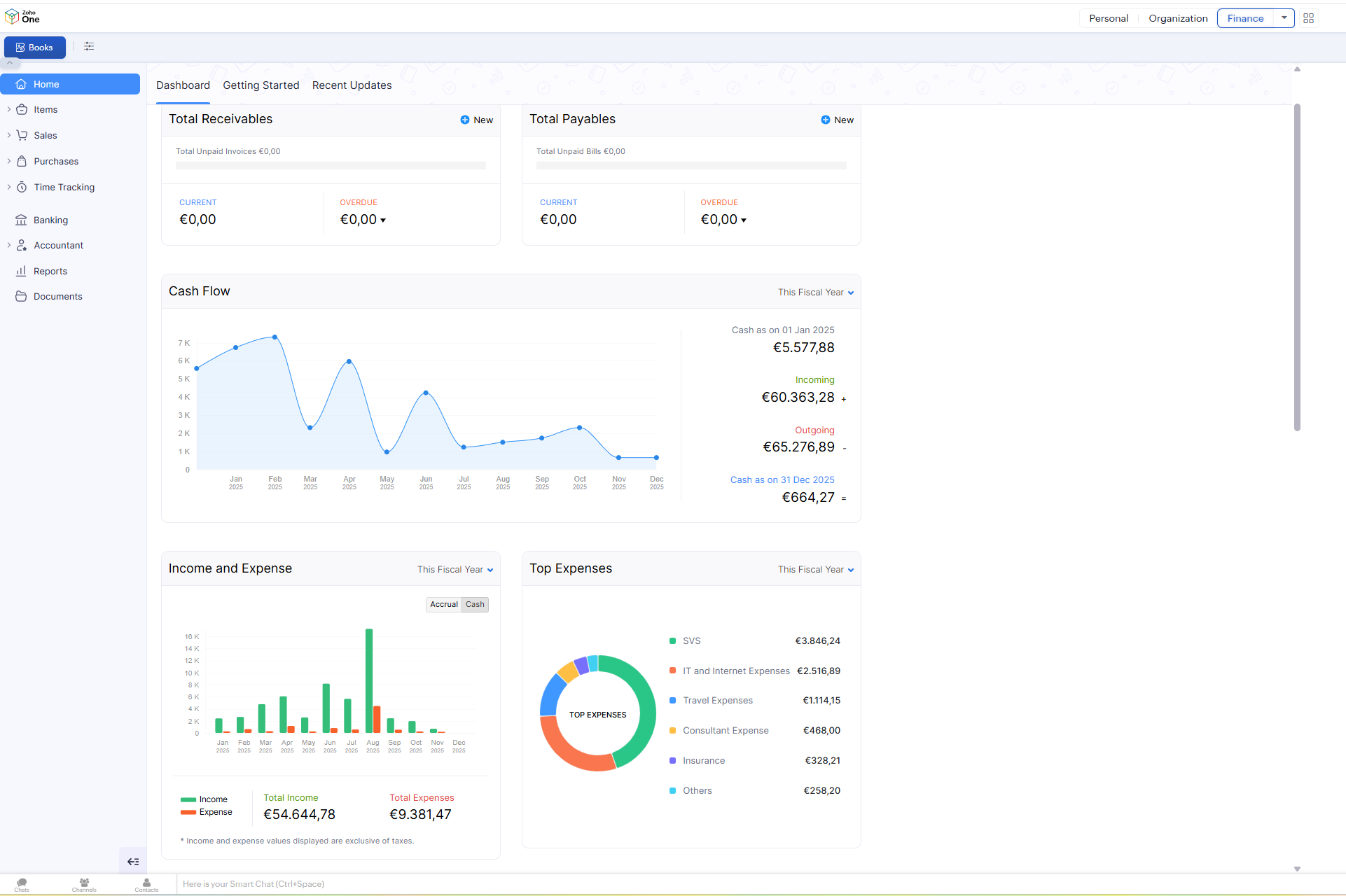
Perhaps no single application addresses South African SME pain points more directly than Zoho Books. With full SARS VAT compliance built in, Zoho Books eliminates the compliance struggles that plague businesses using generic international accounting software.
The Manual Accounting Trap
South African businesses using Excel spreadsheets or non-localised accounting software face:
Manual VAT calculations with high error rates
Time-consuming VAT 201 report preparation
Difficulty tracking multi-currency transactions
No automated bank reconciliation
Manual invoice creation and payment chasing
Limited visibility into real-time cash flow
SARS audit anxiety due to incomplete records
How Zoho Books Solves SA-Specific Challenges
SARS VAT Compliance: Zoho Books generates VAT 201 reports, VAT audit reports, VAT correction reports, and tax summary reports that comply with SARS regulations, making tax season dramatically less stressful. The system automatically applies correct VAT rates based on transaction types.
Automated Invoicing: Create professional, VAT-compliant invoices with customisable templates featuring your branding, and set up automated payment reminders to improve cash flow. Businesses utilising automated invoicing see a 20% increase in on-time payments.
Bank Integration: Zoho Books connects directly to South African banks, automatically importing and categorising transactions, which reduces manual data entry by 40%.
Multi-Currency Support: For businesses trading across borders or dealing with international suppliers, Zoho Books handles multiple currencies whilst maintaining SARS-compliant reporting.
Real-Time Financial Insights: Generate over 70 predefined reports including profit and loss statements, balance sheets, cash flow reports, and custom analytics that provide visibility into business performance.
You can read more here: Enterprise Times Article Zoho Books South Africa
Proven Results from Implementation
Companies implementing Zoho Books report impressive outcomes:
One service business reduced client onboarding time from 4 hours to 15 minutes (a 93% reduction)
Complete elimination of 10 hours per month previously spent on accounting sync
One company eliminated £8,000 in annual revenue leakage
ROI achieved within just 4 months
30% reduction in manual data entry with error rates dropping to just 0.1%
The Integrated Advantage: How It All Works Together

Whilst each Zoho application delivers individual value, the real transformation occurs when they work together as an integrated system. Because all Zoho applications are built on a single platform, data flows seamlessly between them without duplication or manual transfer.
Example: From Lead to Payment—Fully Automated
Consider a typical sales cycle for a South African service business:
Lead Capture: A potential client fills out a web form, which automatically creates a lead in Zoho CRM with complete contact details and enquiry information.
Proposal and Quote: The sales team generates a professional quote in Zoho Books, which pulls client information directly from Zoho CRM. The quote is emailed to the client.
Digital Contract: Once the client accepts, a service agreement is sent through Zoho Sign for electronic signature. The client signs on their mobile device within minutes.
Project Initiation: The signed contract triggers automatic creation of a project in Zoho Projects, assignment of team members, and generation of initial tasks.
Invoicing: Zoho Books automatically generates a VAT-compliant invoice based on the agreed terms, applies the correct SARS rates, and emails it to the client.
Payment Tracking: When the client pays, the bank feed in Zoho Books automatically reconciles the payment, updates the invoice status, and notifies the team in Zoho CRM.
Client Success: The CRM tracks ongoing client interactions, satisfaction, and renewal dates, sending automated reminders to the account manager 60 days before contract renewal.
The Result
This entire workflow—which previously required manual data entry at each stage, printed documents, physical signatures, and constant follow-up—now runs automatically.
Typical outcomes:
10-20 hours saved per week
95%+ error reduction
2-4 month ROI
Zero documents lost or missing
Complete audit trail for compliance
Real-time visibility at every stage
Want to map this for your specific business? My Zoho Process Audit creates a detailed, prioritised implementation plan showing exactly how to automate your workflows and what ROI to expect.
Industry-Specific Applications in South Africa
Zoho One's flexibility allows it to serve diverse industries across the South African economy:
Agriculture
Strategix Agriculture ERP integrates with Zoho to provide crop planning, livestock management, and regulatory compliance tools specifically designed for African farms. Combined with Zoho Books for financial management and Zoho CRM for customer relationships, agricultural businesses gain end-to-end digital operations.
Professional Services
Law firms, accounting practices, and consultancies use Zoho to track time, manage client relationships, generate VAT-compliant invoices, and collect digital signatures on engagement letters—all within one platform.
Retail and E-commerce
Zoho Commerce enables SMEs to create online stores, whilst Zoho Inventory tracks stock levels across multiple channels with VAT-compliant transactions and integration with South African carriers like The Courier Guy.
Manufacturing and Distribution
Businesses use Zoho to manage production workflows, track inventory, handle purchase orders, and maintain compliance with industry regulations.
Overcoming Common Implementation Concerns
South African SMEs often raise several concerns when considering digital transformation. Here's the reality:
"We Can't Afford It"
At R450 per employee per month for the entire Zoho One suite, the platform costs less than many businesses currently spend on disconnected point solutions.
Consider that manual processes cost businesses an average of 15-20 hours per month just on financial administration. If you value that time at even R200 per hour, you're spending R3,000-4,000 monthly on just one aspect of administration—more than the Zoho One subscription for multiple employees.
Moreover, companies typically achieve 2-4 month ROI through time savings, error reduction, and improved efficiency.
"Our Team Isn't Tech-Savvy"
Zoho applications are designed with user-friendly interfaces that require minimal technical knowledge. Around About Removals, a Pretoria-based furniture removal company, successfully transitioned from pen-and-paper processes to Zoho despite having no prior digital systems experience.
Proper implementation includes comprehensive training, documentation, and support. Working with an experienced implementation partner ensures your team understands not just how to use the system, but why it benefits them.
"We're Too Small"
Zoho One scales from micro-enterprises to large corporations. The platform includes a free trial, allowing businesses to test functionality before committing. Smaller businesses can start with core applications (CRM, Books, Sign) and expand usage as they grow, without switching platforms or migrating data.
"Implementation Will Disrupt Our Business"
Structured implementation approaches minimise disruption. Typical implementations range from 2-6 weeks depending on complexity, with most businesses seeing immediate benefits once core workflows are automated.
The key is starting with high-impact, high-value processes rather than attempting to digitise everything simultaneously. Many businesses begin with accounting (Zoho Books) to address SARS compliance, then add CRM for sales management, followed by digital signatures to eliminate paper bottlenecks.
The Competitive Imperative: Why Act Now

South Africa's economic outlook for 2025 projects GDP growth of approximately 1.5-2.2%—modest but positive. However, this growth environment also intensifies competition, as businesses vie for limited market opportunities.
Research shows that 60% of South African SMEs still have not fully embraced digital tools, creating a significant competitive advantage for those who do.
Key Trends Driving Urgency
Digital Payments and Cashless Economy: SARB's roadmap targets a cashless economy by 2035, with 58% of SMEs already using digital transactions. Businesses without integrated digital financial systems will struggle to compete.
AI and Automation: Mainstream AI solutions are becoming accessible to SMEs through platforms like Zoho, which incorporates AI assistant Zia across its applications. Early adopters gain efficiency advantages that manual competitors cannot match.
Customer Expectations: Clients increasingly expect professional digital experiences—online invoicing, quick turnaround on quotes, electronic signatures, and real-time communication. Businesses still relying on printed invoices and physical signatures appear outdated.
Regulatory Complexity: As SARS requirements become more stringent and POPIA enforcement intensifies, manual compliance becomes increasingly risky and time-consuming. Digital systems with built-in compliance provide peace of mind and reduce audit risks.
Talent Retention: Skilled employees, particularly younger workers, expect to work with modern tools rather than manual processes. Companies using outdated systems struggle to attract and retain talent.
Getting Started: A Practical Roadmap
For South African SMEs ready to move beyond manual processes, here's a practical approach:
Phase 1: Assessment and Planning (Week 1-2)
Identify your biggest pain points: Is it VAT compliance? Lead tracking? Invoice collection? Contract signing?
Map current workflows to understand where time is wasted and errors occur
Define success metrics: hours saved, error reduction, cash flow improvement
Take advantage of Zoho's 14-day free trial to explore the platform
Professional guidance accelerates this phase. My Zoho Process Audit provides a comprehensive analysis of your specific workflows with a detailed, prioritised implementation plan, showing exactly which Zoho solutions will deliver the biggest ROI.
Phase 2: Core Implementation (Week 3-6)
Start with Zoho Books for VAT-compliant accounting and invoicing, addressing immediate SARS requirements
Implement Zoho CRM to centralise customer data and automate lead management
Add Zoho Sign to eliminate paper-based approval and signing processes
Work with an experienced implementation partner for guided setup and configuration
Need expert implementation? My Zoho CRM Implementation service delivers a fully configured CRM tailored to your exact sales process, with comprehensive team training and 60 days of post-launch support.
Phase 3: Integration and Automation (Week 7-10)
Connect applications using Zoho Flow to automate data transfer between systems
Set up automated workflows for common processes: lead-to-quote, quote-to-invoice, invoice-to-payment
Configure automated reminders, notifications, and follow-ups
Train team members on new workflows and processes
Want to link your business tools together. My Workflow Automation service helps businsesses do just that using tools such as Zoho Flow, Make.com and Zapier.
Phase 4: Optimisation and Expansion (Ongoing)
Monitor metrics and identify additional automation opportunities
Expand to additional Zoho applications as needs arise: Zoho Projects for project management, Zoho Inventory for stock control, Zoho Campaigns for email marketing
Regularly review and optimise workflows based on team feedback
Need ongoing optimisation? My Zoho Retainer Support packages provide continuous expert assistance as your business evolves—from quick adjustments to strategic planning, with predictable monthly costs.
Real Results: What South African Businesses Are Achieving
The evidence from South African businesses implementing Zoho demonstrates tangible, measurable benefits:
Plastic Bubbles, in partnership with Infolytics, implemented Zoho One to replace fragmented manual workflows, streamlining lead management, credit application processing, and customer support.
Eventagrate Group started with four Zoho applications and expanded to 23 Zoho applications as they discovered additional use cases and value.
Around About Removals in Pretoria completely transformed their operations, moving from manual pen-and-paper planning to an integrated digital system. This eliminated "tedious admin work, double entries, and duplication of effort" whilst creating a "single source of truth."
Typical Results Across Implementations
10-20 hours saved per week through elimination of manual data entry and automated workflows
95%+ reduction in errors from eliminating manual data transfer between systems
Real-time updates instead of waiting for manual data entry and reconciliation
2-4 month ROI from time savings, error elimination, and improved efficiency
40% improvement in operational efficiency through digital transformation
Why Work with a Europe-based Zoho Expert for Your South African Business
Whilst I'm based in Austria, I work seamlessly with clients across South Africa and globally. Here's why location doesn't limit the value I deliver:
Remote Implementation Expertise
All implementation, training, and support happen via video calls and screen sharing. My clients in South Africa experience the same high-quality service as those in Europe, with flexible scheduling to accommodate time zone differences.
International Experience, Local Focus
Working across multiple markets gives me perspective on best practices whilst understanding South African-specific requirements like SARS compliance and POPIA regulations. I configure Zoho systems with SA localisation at the forefront.
Zoho Creator Certified Developer
I'm not just a consultant—I'm a certified Zoho Creator developer with deep technical expertise. I understand the platform's capabilities and limitations, ensuring realistic recommendations and proper implementation.
Proven Track Record
My clients include businesses across multiple industries and geographies, with testimonials reflecting consistent delivery of high-quality results, technical expertise, and business process thinking that aligns solutions with operational needs.
Conclusion: The Future Belongs to Digital-First South African SMEs
The South African SME sector stands at a crossroads. With 91% of businesses being SMEs and contributing 34% to GDP, the sector's digital transformation will shape the country's economic future.
Those businesses that embrace integrated digital platforms like Zoho One will gain significant advantages:
SARS-compliant operations with automated VAT reporting
Workflow automation eliminating manual bottlenecks
Real-time business insights for strategic decision-making
Scalability without proportional increases in administrative overhead
Competitive positioning against businesses still using manual processes
The evidence is compelling:
43% growth in Zoho adoption within three months of South African localisation
Businesses achieving 2-4 month ROI
10-20 hours saved weekly through automation
Fixed rand pricing from R450 per employee per month
The question isn't whether to digitise, but how quickly you can implement systems that eliminate manual processes, ensure compliance, and free your team to focus on growth rather than administration.
South African SMEs that acted early are already reaping the benefits. The opportunity remains open—but the competitive advantage of early adoption diminishes as more businesses make the transition.
Your Next Step
I invite you to explore how Zoho One can transform your South African business:
Not sure where to start? Begin with a Zoho Process Audit—I'll analyse your workflows, identify time-wasters, and create a custom automation roadmap showing exactly what to implement and what ROI to expect.
Ready to implement? My Zoho CRM Implementation service delivers a fully configured, customised CRM tailored to your sales process, with comprehensive training and support.
Need ongoing optimisation? Zoho Retainer Support packages provide continuous expert assistance as your business evolves, with predictable monthly costs and priority access to Zoho expertise.
Book a free 30-minute consultation to discuss your specific situation. No pressure, no obligation—just expert guidance on whether Zoho One makes sense for your business and what your implementation journey would look like.
Your competitors are digitising. Your customers expect digital experiences. SARS and POPIA require robust compliance. The time to upgrade from manual processes to Zoho One is now.
About Virtual Process Consultant
Based in the UK and serving clients globally, I specialise in implementing Zoho solutions for SMEs ready to move beyond manual processes. As a Zoho Creator Certified Developer, I deliver customised CRM implementations, workflow automation, and complete Zoho One deployments that achieve rapid ROI.
I work remotely with businesses across South Africa, providing the same high-quality implementation, training, and support as my UK-based clients. My approach focuses on understanding your specific workflows, configuring systems that your team will actually use, and ensuring measurable results from day one.
Contact me today to discuss how Zoho One can transform your South African business operations.